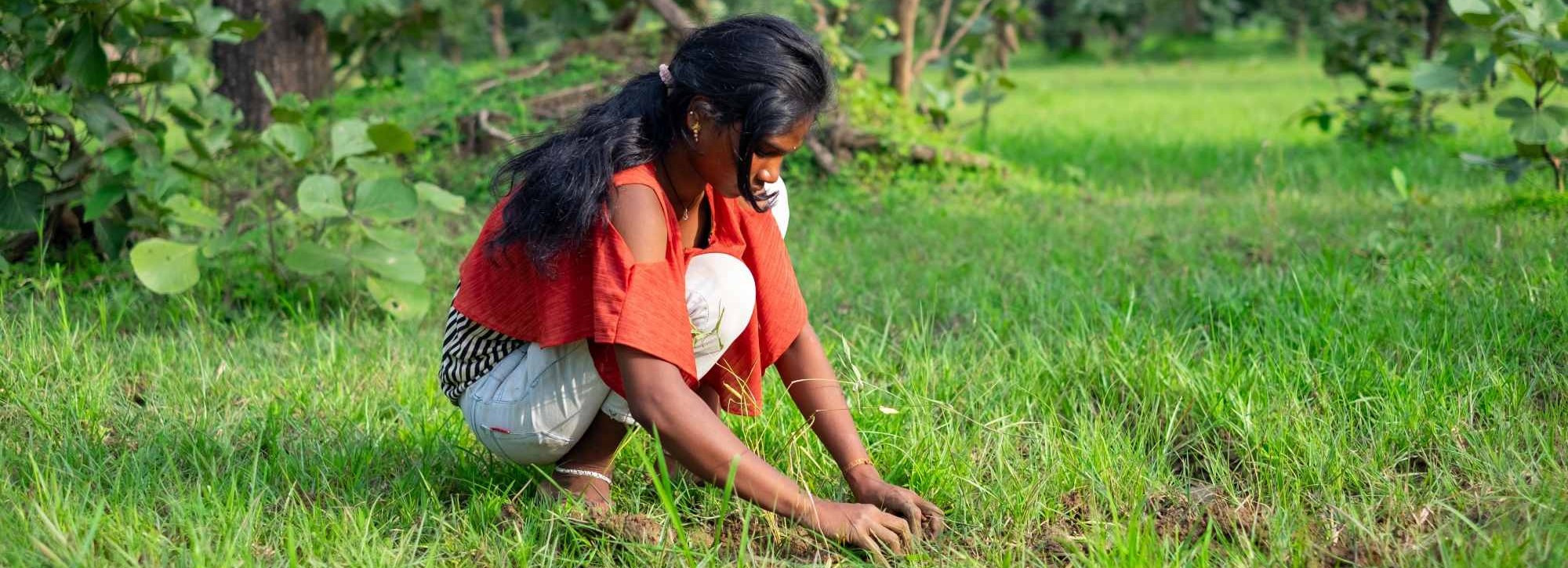
The Status Quo: A Land in Crisis
A fierce battle rages between India’s ecology and economy. In pursuit of higher yields, industrial agriculture, deforestation, and relentless extraction have left vast swathes of land unhealthy. Nearly 30% of India’s land is now degraded, threatening the livelihoods of 500 million people who depend on agriculture and forestry.
90%. of India’s biodiversity hotspots are lost to deforestation and habitat conversion.Forests continue to fall - India lost 600,000 hectares between 2015 and 2020, the second highest rate globally.Climate extremes - floods, droughts, wildfires - are intensifying, slashing farmer incomes by up to 25%.
Without intervention, degraded lands will keep expanding, pushing communities deeper into poverty and ecosystems closer to collapse.
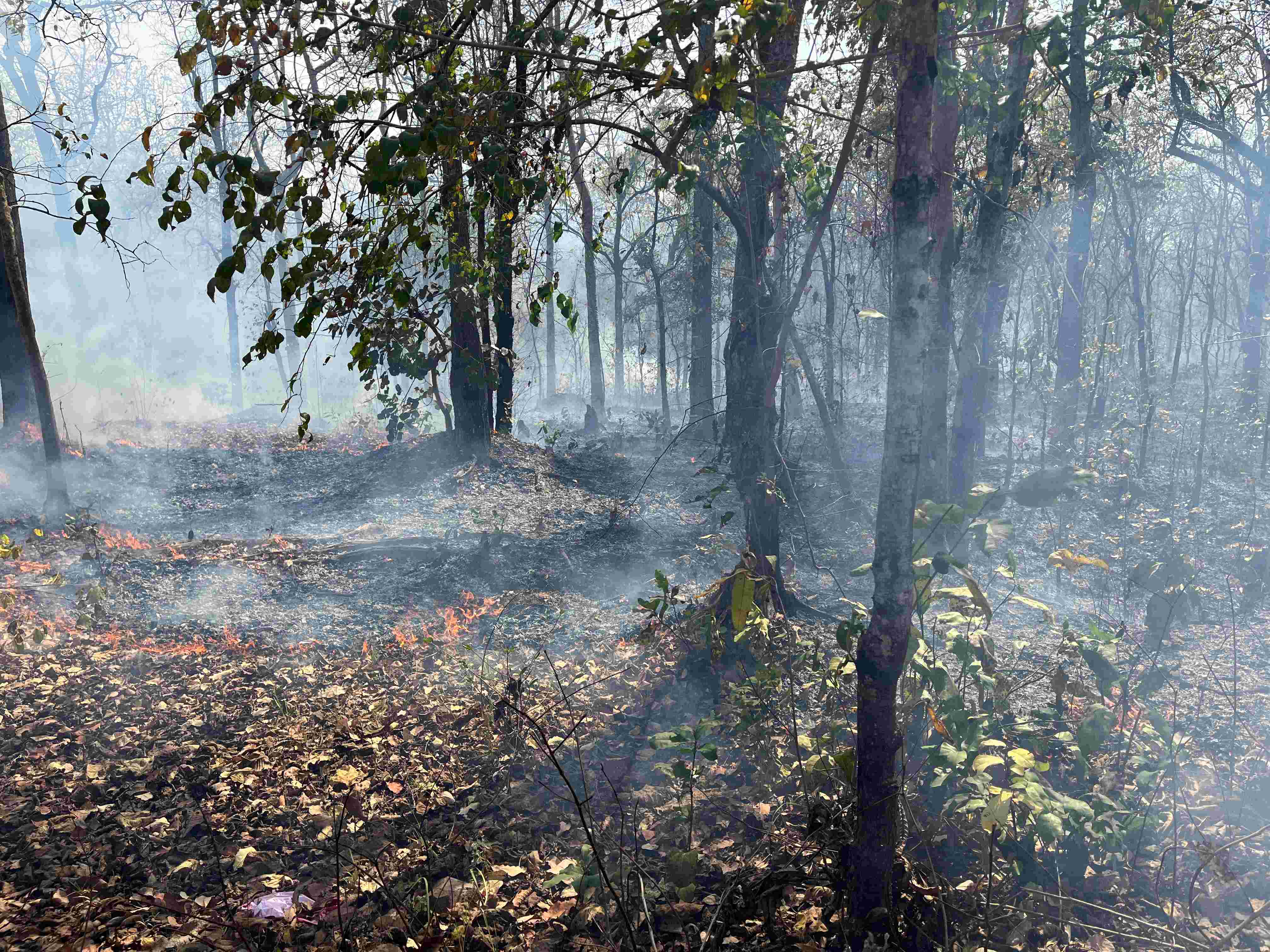
Forest fire in Gadchiroli, Maharashtra
Our Response: Agroforestry for Resilient Futures
Farmers for Forests (F4F) was founded to rewrite this story. Our agroforestry program transforms abandoned, degraded, or barren farmland into biodiverse, multi-layer agro-forests that restore ecosystems and supplement farmer incomes.
We work on a Results-Based Payments model - farmers are rewarded not just for planting trees, but for nurturing them over years, ensuring survival and long-term impact. Our approach blends nature-based restoration with tech-enabled transparency, creating forests that are as accountable as they are alive.
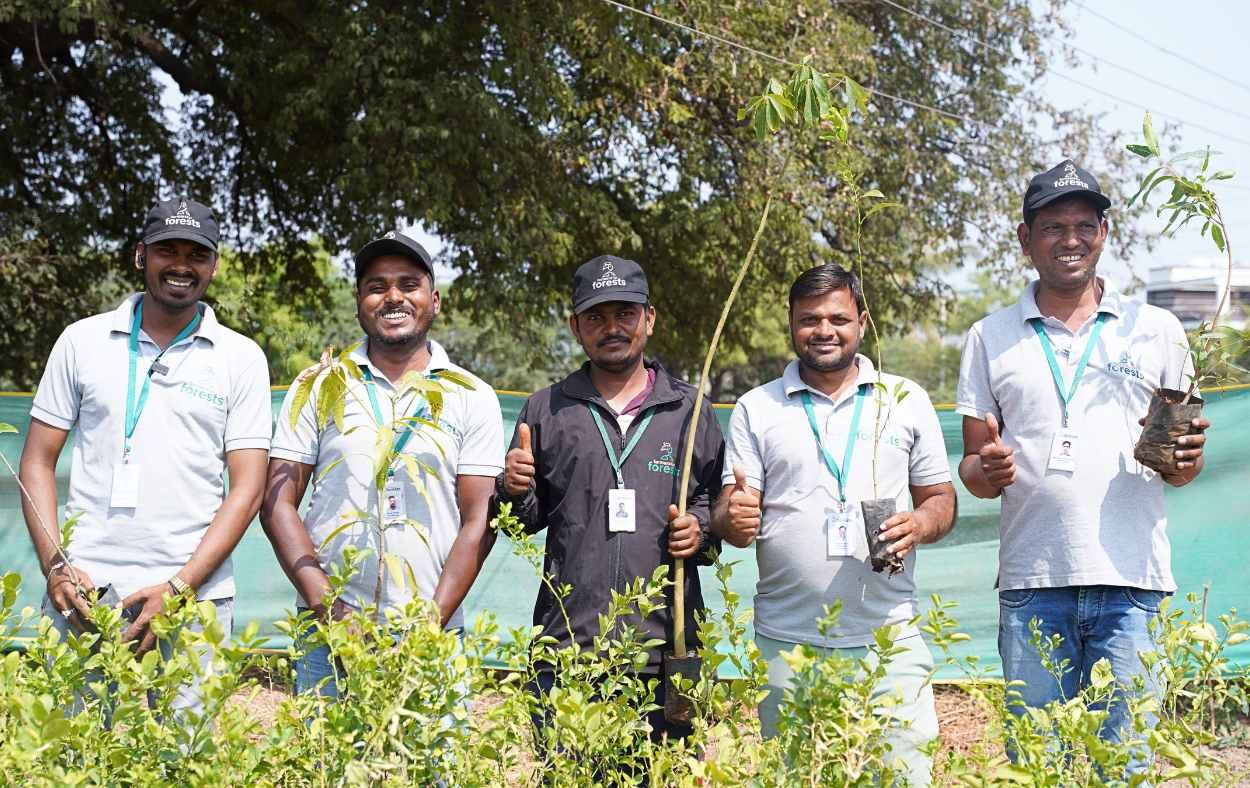
F4F Field Team
Our model, explained

Identification & Enrollment
Working with local NGOs and elected leaders, we identify degraded plots and enroll interested farmers. This involves site visits, GPS mapping, soil testing, and community meetings to align expectations and explain program benefits

Training & Planning
Farmers receive hands-on agroforestry and carbon market training - from species selection to sustainable practices like composting and drip irrigation. Planting plans prioritize ecologically and economically suitable tree species.

Land Preparation
Plots are GPS-mapped, cleared of weeds or debris, enriched with natural fertilizers, and equipped with drip irrigation or fencing where needed - setting the stage for healthy tree growth.

Planting
Saplings are planted in carefully designed layers - fruit trees, timber species, shrubs, and intercrops - trying our best to mimic natural forests. This diversity reduces pest risks, attracts pollinators, and ensures year-round productivity.

Post-Plantation Care
For the first four years, farmers receive Results-Based Payments to maintain saplings, weed manually, mulch, and ensure survival of the trees. This support bridges the income gap until trees begin producing fruit, fodder, or timber

Monitoring & Impact Tracking
Our TreeLens drone-AI platform and field tools track every tree’s growth, carbon sequestration, and biodiversity impact. This data powers transparent reporting for farmers and funders alike
Why It Matters
Our agroforestry plots are typically three times more biodiverse and sequester four times more carbon than conventional farms. They replenish soils, recharge water tables, and provide farmers with resilient income streams - fruits, timber, and more - while healing landscapes for generations to come.
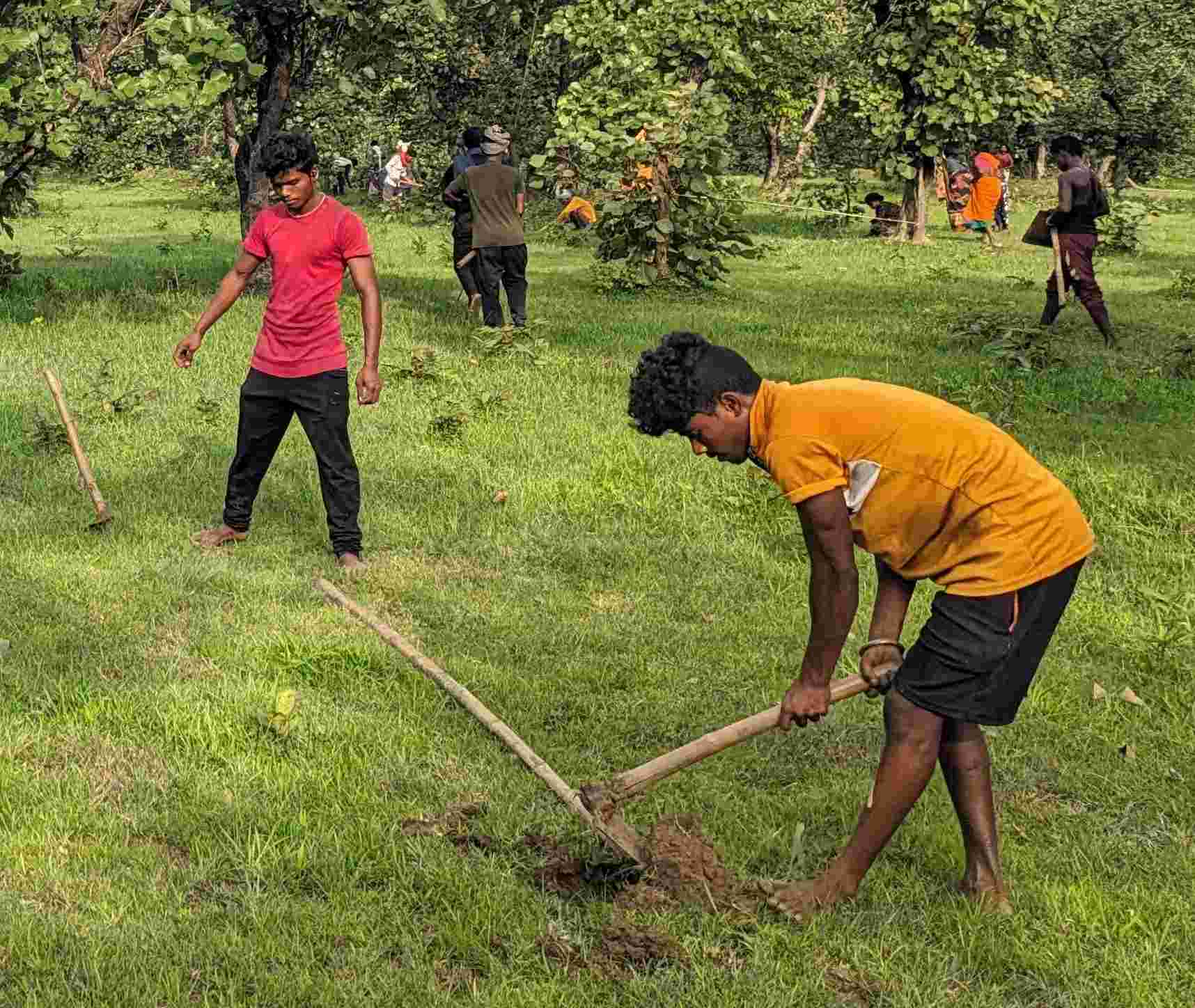
Forest Protection
.png)
.png)
.png)